
We can pack for you. Or, if you would rather do it yourself, here is how to do it properly.
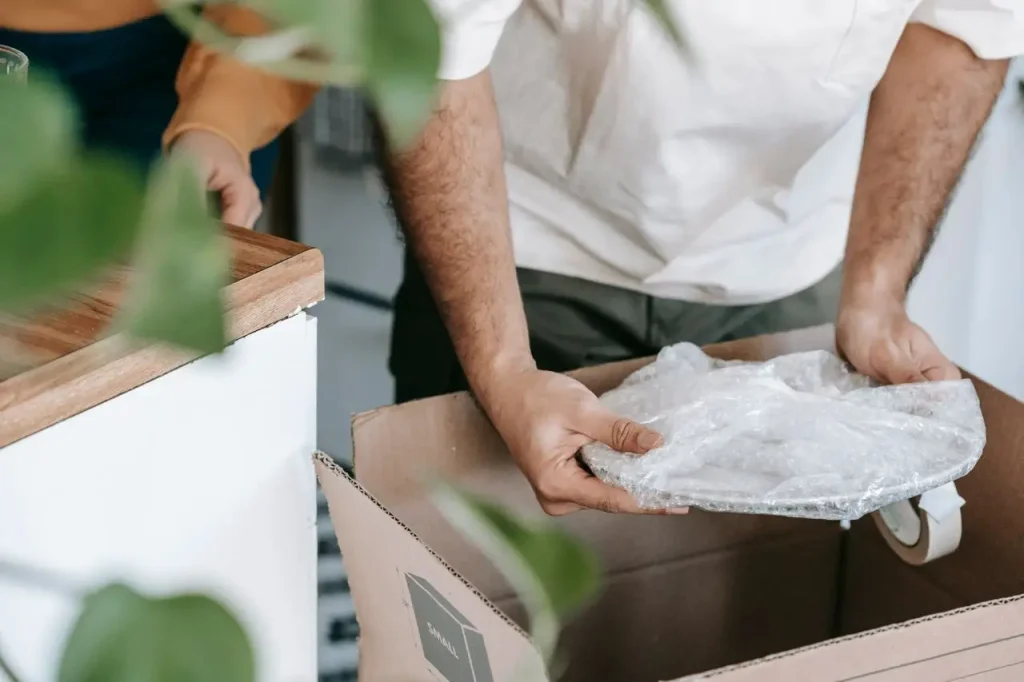
Packing is the single biggest job in a move, and it is the one people most consistently underestimate. It is also entirely doable yourself if you have the time.
Three or four weeks, a reasonably clear idea of what you own, and evenings you are willing to give up. Packing a two-bed flat properly takes most people somewhere between fifteen and twenty-five hours spread over a fortnight. It is not hard. It is just long.
Moving at short notice, working full time through the run-up, a house rather than a flat, or the thought of wrapping every glass individually makes you want to lie down.
It usually is, and it is the most common thing people ask us to take off them while doing the rest themselves.
There is no wrong answer. What there is is a wrong assumption, which is that you will get it all done in the last weekend. Nobody does.
This is the first thing everybody gets wrong, almost always downwards. As a rough industry guide:
1 bed flat
20 to 30 boxes
2 bed flat or house
40 to 55 boxes
3 bed house
60 to 80 boxes
4 bed house
90 to 120 boxes
Those numbers surprise people. They also vary enormously with how long you have lived somewhere, whether there is a loft, and how many books you own. Books alone can add twenty boxes to a house that otherwise looks modest.
Get more than you think you need. Unused boxes are a minor annoyance. Running out on a Sunday evening two days before the move is a real problem, and it is when people start putting things in bin bags, which is where breakages come from.
Boxes are not interchangeable, and using the wrong one is the most common cause of damage.
Books, tinned food, tools, crockery, records. A small box full of books is liftable. A large box full of books is not, and it will either hurt somebody or split at the bottom.
Bedding, pillows, cushions, soft toys, lampshades, coats. That rule reversed is the single most frequent packing mistake there is.
They have a rail across the top and are worth it for anything that creases badly. A wardrobe empties in about four minutes.
Framed things do not travel well in ordinary boxes because the corners take the force.
If a box is too heavy to pick up comfortably, it is the wrong box, not the wrong amount.
A note on tape. Tape the bottom of every box across the seam and then again at right angles. Boxes fail at the bottom, always, and always when they are lifted.
Start with the things you will not miss.
Six weeks out
The loft, the garage, the shed, books, ornaments, spare bedding, out-of-season clothes, anything decorative. None of it will be needed and all of it takes time.
Three weeks out
Most of the kitchen except what you cook with daily, most of your clothes, the contents of cupboards you rarely open.
One week out
The rest of the wardrobe, most of the kitchen, bathroom cabinets except daily items.
The last two days
Everyday crockery, the kettle, toiletries, chargers, bedding.
Working in that order means you are never packing something you then need to unpack. It also means the last two days are genuinely light, which matters more than people expect, because those are the days when something else always goes wrong.
Tell us the property, whether you want the whole house or just certain rooms, and when the move is.
Every experienced packer will tell you the same thing. The kitchen is roughly a third of the total work in a typical house, it contains almost everything breakable, and it is where people run out of energy.
Plates travel on their edges, not stacked flat. This is counterintuitive and it is the most useful thing on this page. A plate is far stronger through its edge than through its face. Stand them vertically in the box like records in a rack, wrap each one, and fill the gaps so nothing can shift.
Glasses go upright, individually wrapped, with the heavier ones underneath. Stemmed glasses want extra padding around the stem, which is where they break.
Fill every gap. An item that can move will move, for an hour, in a van. Scrunched paper, tea towels, socks. Anything that stops movement.
Use your linen as packing material. Towels, tea towels and bedding all need moving anyway, and they protect better than paper. It saves buying materials and it saves a box.
Do not pack the kettle. Nor the mugs, teabags, or a spoon. Put them in a bag that travels with you. Everyone forgets and everyone regrets it.
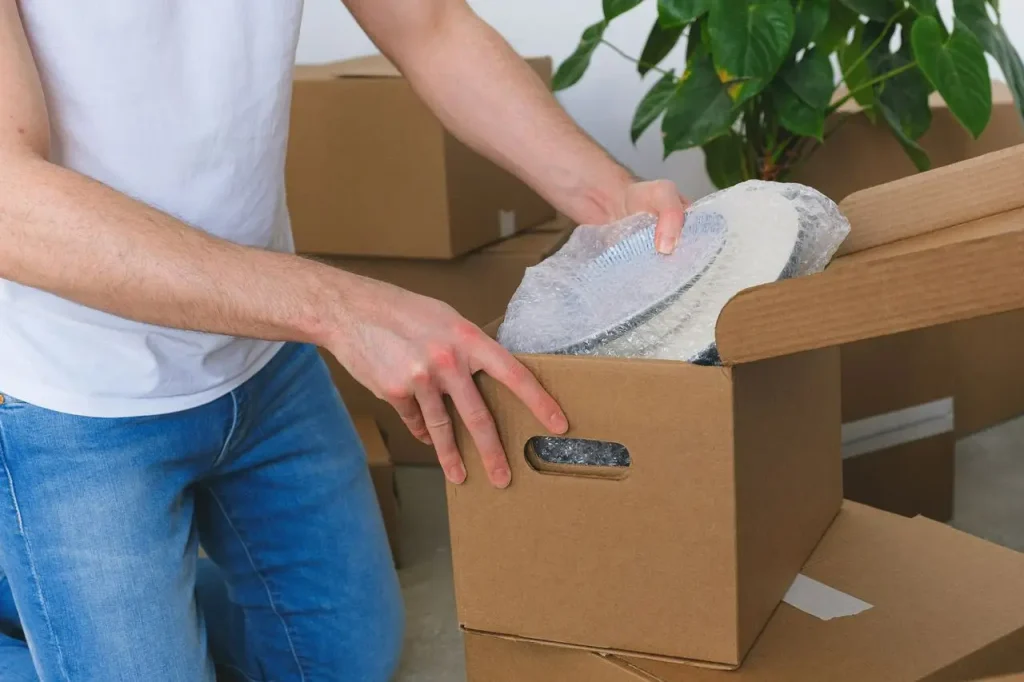
Two items wrapped together become two items hitting each other.
Not just the top. Nobody sees the top once boxes are stacked.
Flat means something gets put on top of them.
If that is long gone, they travel upright with the screen protected, and never flat with anything on top.
Always. Shades crush.
Anything genuinely irreplaceable belongs in your car rather than the van. That is not a comment on any removals company; it is what everyone in the trade does with their own things.
Hanging clothes go in wardrobe boxes if you have them. If you do not, a decent alternative is to leave clothes on their hangers, gather ten or fifteen together, and slide a bin liner up from the bottom with the hooks poking out of the top. It looks improvised. It works.
Folded clothes can stay in drawers if the chest is solid wood and the drawers do not slide open. Tell us if you are planning that, because it changes the weight of the item significantly.
Shoes in their own box, not scattered through others. They are heavier than people think.
Photograph the back of everything before you unplug it. The television, the router, the desk setup. Ten seconds each, and it turns reassembly at the other end from a puzzle into a copy job.
Bag and label the cables for each device separately. A single box of loose cables is a bad afternoon waiting to happen.
Screws and fittings from anything dismantled go in a small sealed bag, taped to the underside of the item they belong to. Not in a general “bits” box.
Most people label by room. That is the minimum, and it is not enough for anything above a flat.
Box 14: kitchen, pans and baking trays. It takes thirty seconds per box and it means you can find the one thing you need without opening fifteen.
Tops disappear the moment boxes are stacked.
In a way you will recognise across a room. A whole side covered in tape, a coloured marker, anything obvious.
If the contents of the old dining room are going in the new study, write study. Otherwise everything ends up in the wrong place and gets moved twice.
Pack it last, and put it in your car rather than the van.
Kettle, mugs, teabags, milk. Toilet roll and hand soap. Phone chargers. A change of clothes each. Medication. Bedding, or at least a duvet. Towels. Basic tools, particularly a screwdriver. Scissors or a knife for opening boxes, which is the thing everyone packs by accident.
It is the difference between sitting down with a brew at seven o’clock and still hunting through boxes at midnight.
Some things cannot travel in a removals van, by law or under our terms:
The second and third groups surprise people. Valuables and small electronics travel with you, in a bag you keep hold of. Every reputable firm applies the same rule.
Anything with fuel in it, mowers and strimmers included, needs draining well before the day rather than on it.
Heavy things go in small boxes. This one mistake causes more breakages than everything else combined.
Anything that can move will, for the whole journey.
On edge, always.
Invisible once stacked.
It is the biggest job in the house and it always takes longer than the plan allowed.
That is what the service is for, and it is a completely reasonable choice.
We can pack the whole house, or just the parts you are dreading. The kitchen on its own is the most common request. Some people want everything except their own wardrobe. Some want the breakables done and will do the rest themselves.
Standard services cover most of it, and for a straightforward job one of those is the simplest way to book. If your situation does not fit, say so. Packing spread across two visits, one room done in advance because it is being decorated, a house where somebody is working from home throughout and needs a room left until last. All of that can be arranged.
Two practical things worth knowing. Packing is usually done the day before the move, not on the morning, unless the job is small. And it needs deciding early, because it changes the size of the booking rather than being added to it.
Doing it yourself, a two-bed flat is typically fifteen to twenty-five hours spread over a couple of weeks. A three-bed house is considerably more. Having it done for you is usually a day, sometimes two.
Yes, and it is the most common request. It is the biggest and most breakable room in most houses.
Tell us what you need when you get in touch and we will sort materials out with you.
Usually the day before the move for anything other than a small job. It needs deciding when you book rather than added later, because it changes the shape of the booking.
Sometimes not, if the furniture is solid and the drawers stay shut. Tell us what you are planning, because full drawers change the weight considerably.
Anything flammable, valuables, documents, small electronics, perishables, plants and animals. The full list is above.
Yes, and it is normal. Tell us which rooms need to stay usable and until when.
Tell us the property, whether you want the whole house or just certain rooms, and when the move is. If you are unsure whether you need it, describe the situation and we will give you an honest answer, including that you probably do not if the job is small.
RCM Removals
20 Swan Street, Manchester M4 5JW
Telephone: 0161 768 2056
Email: info@removalscompanymanchester.co.uk