

The short version: cats read a move weeks before it happens, from routine changes and the smell of cardboard, and their instinct under threat is to hide somewhere small and inaccessible rather than to run. The prevention is a shut door before packing starts, not a search party afterwards. If one does bolt at the new address, it will usually be within about fifty metres and silent, and the microchip database entry needs to already say the right address.
The van is booked for eight. At half past seven somebody says, entirely calmly, has anyone seen the cat.
What follows is familiar to a lot of households. Twenty minutes of increasingly unhurried searching becomes forty minutes of genuine concern, and then somebody finds her folded into a gap behind the boiler that no cat should physically fit into, with an expression suggesting she intends to stay there until 2029.
Here is the part that surprises people. She did not vanish because of the van. She had been planning this since roughly the second week of packing.
What a Cat Notices Before You Have Told Anyone
Cats build a detailed map of territory using scent and routine, and both change long before moving day. Boxes appear, furniture shifts, cupboards empty, and people move around the house differently. To a cat, that is the environment becoming unpredictable, which is precisely the condition it is wired to respond to.
Cats bond to place at least as strongly as to people. Their sense of safety comes from a territory they know completely: which surfaces smell of them, which routes lead where, where the sightlines are. Every box that comes into the house arrives smelling of a warehouse, and every item that leaves takes a familiar scent marker with it.
Add the routine changes. Meals slightly late because somebody was at the tip. Doors propped open. Strangers coming to view. Evenings spent doing something loud in the spare room instead of sitting still.
None of this is dramatic to a person. To an animal that measures safety in consistency, it accumulates into a clear signal that something is wrong, without any information about what.
Why Hiding, Rather Than Running
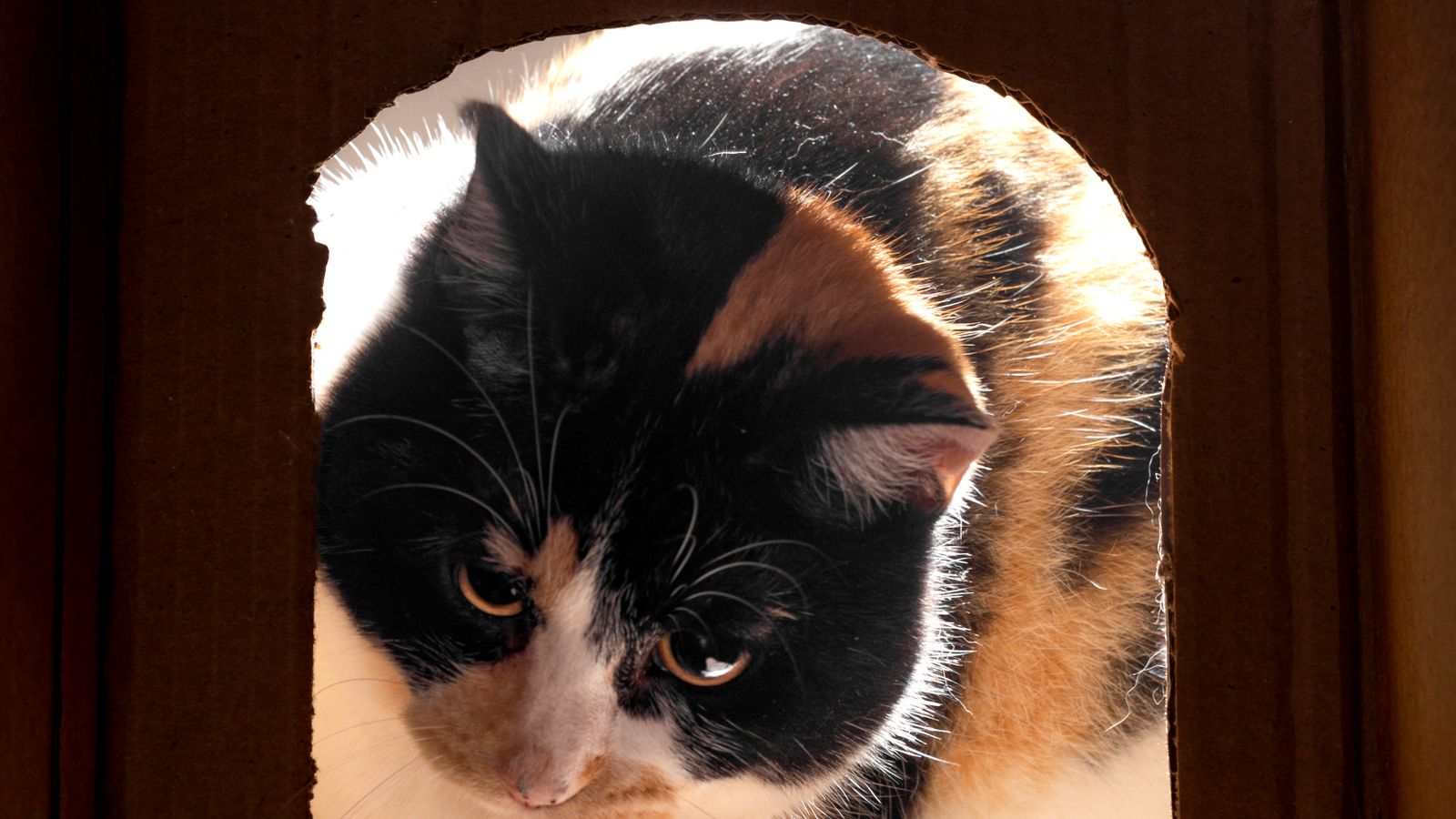
A cat’s first response to a perceived threat is concealment, not flight. Given a choice, it will pick somewhere enclosed, dark and hard to reach, which is why the search takes so long and why the cat rarely responds to being called.
This is worth understanding because it changes how you search. People instinctively look in open spaces and call the cat’s name. A frightened cat will not come when called, because moving and making noise is the opposite of what its instincts are telling it to do.
The places to actually check, in rough order of likelihood: inside the divan base, behind or under the bath panel, in the airing cupboard behind the tank, behind the washing machine, inside a wardrobe on top of folded clothes, behind the boiler, under floorboards where a gap exists, and inside any box, drawer or suitcase left open for more than about ninety seconds.
That last one is not a joke and it causes real problems. Cats get into packing cases and stay there, and a lid going on is how a cat ends up in a van. Anyone who has moved a household with cats has a story about opening a box at the far end and finding something unexpected.
The Prevention Is a Door, and It Closes Early
Pick one room, empty it first, and put the cat in it before any activity starts on the day, with a sign on the door telling everyone to keep it shut. This single step prevents almost every version of the problem, and it has to happen before the front door opens rather than once the cat has already disappeared.
The room needs a litter tray, water, food, somewhere to hide within the room such as a covered bed or an open carrier, and something that smells of home and has not been washed.
The sign matters more than it sounds. On moving day the house fills with people who do not know there is a cat, and a door left open for thirty seconds is enough. Write it large and tape it at eye level.
A cattery for the day, or a friend’s house, works even better where it is practical. Book early, because the end-of-month dates that suit completions are the ones that fill first.
Two things to do in the weeks beforehand. Leave the carrier out, open, with a blanket in it, so it stops being an object that only appears before something unpleasant. And keep feeding times fixed even when everything else in the house is chaos, because a reliable meal is a reliable signal.
If the Cat Bolts at the New House
Most cats that escape shortly after a move do not go far. They usually stay within a small radius, hidden and silent, for the first day or two, because they have no map of the new area to navigate by. Searching close and quietly beats searching wide and loudly.
Check your own property thoroughly first: under the decking, in the shed, behind the bins, in the gap under a garden building. Then ask immediate neighbours to check garages, sheds and outbuildings, because those are where cats end up shut in accidentally.
Search at dusk and after dark when it is quiet, and take something that makes a familiar noise, such as the box the biscuits live in. Put a litter tray outside the back door, along with unwashed bedding. Scent travels and it is the thing a lost cat can actually follow.
Report the cat missing to your microchip database straight away and let local vets know. This is where the address point becomes concrete rather than administrative.
The Job Almost Everyone Forgets
Updating the microchip database with your new address is a legal requirement, not a courtesy. Cats in England must be microchipped and the keeper must keep the registered details current, with fines of up to £500 for non-compliance. Do it before the move rather than after.
The reason to do it in advance is straightforward. The days immediately after a move are exactly when a cat is most likely to go missing, and that is precisely the window in which an out-of-date record does the most harm. A cat picked up two streets away is scanned by a vet, and the database returns the address of the house you left last week.
It takes a few minutes online with the chip number. While you are there, check the phone number on the record too, since plenty are years out of date.
Register with a vet near the new address in the same sitting, and ask for the history to be transferred. Our guide to who to inform when moving house covers the rest of the notification list.
What Makes This Harder in Manchester
Terraced streets, shared back alleys and busy roads change the risk profile considerably. A cat that gets out of a Levenshulme terrace has a continuous run of connected yards to disappear into, and a cat moving across the city may attempt to return through traffic it has no experience of.
The back alleys are the main issue. Terraced housing across much of south and east Manchester shares rear entries, which gives an escaped cat a sheltered route running the length of the street and beyond. It is where cats go and where they are hardest to find, because every yard looks the same and most are gated.
Ask the neighbours early rather than late. On a terraced street the people either side and directly behind can check their own yards and outbuildings in minutes. Knocking on the first evening produces a far better result than a poster three days later.
Moving within the city carries a specific risk. A cat that goes back tries to reach the old address by the route it knows, and across Manchester that can mean crossing roads it has never encountered. The distance being short is not reassuring here. It is the reason to keep the cat in longer rather than less.
City-centre flats have their own version. Balconies, communal corridors and a lift lobby that opens onto stairs are all escape routes, and a cat loose in a shared building can get several floors away quickly. Keep the flat door shut and treat the balcony as off limits until they have settled.
Keeping Them In, and For How Long
Two weeks indoors is the usual minimum, and longer suits nervous cats, cats that have moved a long way, and cats now living near a main road. It is genuinely dull for everyone, and it is the thing that most reduces the chance of a cat going missing.
Make the confinement easier rather than shorter. Feed them more often in smaller amounts, play more than usual, and open one room at a time over the first few days rather than giving them the run of the house immediately.
When the time comes, let them out before a meal rather than after, so there is a reason to come back, and go with them the first few times. Keep the cat flap locked shut for a while longer than feels necessary.
Expect some odd behaviour in the meantime. Hiding, reduced appetite for a day or two, and using the tray more often are all common. Appetite returning to normal is usually the clearest sign things are settling. If a cat stops eating entirely, or hides continuously for several days without drinking, that is a call to the vet rather than something to wait out.
How We Work Around a Cat on the Day
Crews cannot move animals, and no removals firm should offer to. What makes a difference is knowing in advance.
Tell us at survey stage that there is a cat and which room will be shut. It means the crew clears that room first and leaves it alone, rather than finding a closed door mid-load and having to ask. It also means nobody props the front door open for convenience without thinking about it.
Our Manchester packing services genuinely help here for a reason that is not obvious: a house packed in two days rather than spread over three weekends gives a cat far less time to work out that something is happening. Compressing the disruption is the kindest version of it.
Our house removals cover the move itself, and self storage is there when dates do not line up. Have a look at the Removals Company Manchester homepage or get a quote, and mention the cat when you do.
Questions People Ask About Cats and Moving Day
Why does my cat hide when I start packing?
Because the environment has become unpredictable, which is the condition cats are wired to respond to. Boxes bring unfamiliar smells, furniture moves, and routines slip. Concealment is their default response to anything uncertain, and it starts well before moving day itself.
Where do cats hide on moving day?
Somewhere enclosed and hard to reach: inside divan bases, behind bath panels, in airing cupboards, behind appliances and inside wardrobes. They will not come when called, because staying still is what their instincts are telling them to do. Search quietly and check enclosed spaces rather than open ones.
How do I stop the cat escaping while the van is being loaded?
Shut them in one cleared room before any activity starts, with a litter tray, water, food and somewhere to hide, and put a large sign on the door. The front door will be open for hours and the house will be full of people who do not know there is a cat. A cattery for the day works even better.
How long should I keep a cat indoors after moving?
At least two weeks, and longer for nervous cats, long-distance moves or homes near busy roads. Let them out before a meal rather than after, go with them the first few times, and keep the cat flap locked for a while after that.
Do I have to update my cat’s microchip details when I move?
Yes. Cats in England must be microchipped and the keeper is legally required to keep the registered details up to date, including a change of address, with fines of up to £500. Update it before the move, because the first fortnight afterwards is when cats are most likely to go missing.
My cat has run off at the new house. What should I do first?
Search close rather than wide, because cats that escape after a move usually stay within a small radius and go quiet. Check your own garden, sheds and under decking, then ask immediate neighbours to open garages and outbuildings. Put unwashed bedding and a used litter tray outside, and report it to the microchip database.
Will my cat try to go back to the old house?
Some do, particularly where the move was short and the cat got out early. They navigate by the route they know, which across a city can mean crossing unfamiliar roads. That risk is the main argument for keeping them in longer rather than trusting them sooner.